
Retail & Shopping Centers Mystery Shopping in Pakistan
Evaluate retail customer journeys in Pakistan. Review sector-specific journeys, evaluation areas, KPIs and reporting deliverables.
Request a ProposalWhere retail evaluations can help
Evaluate retail customer journeys in Pakistan. Review sector-specific journeys, evaluation areas, KPIs and reporting deliverables.
When this can help
- New promotion rollout. We compare approved offer terms with shelf displays, staff explanations and the applicable checkout treatment.
- Uneven store service. We use the same product need across selected formats to identify differences in assistance and sales communication.
- Product-launch readiness. We check whether launch displays, customer information and staff explanations support the approved product introduction.
- Unanswered product questions. We examine how associates clarify the customer’s needs, explain suitable options and respond when information is unavailable.
- Returns and service recovery. We follow an approved return or order concern and record acknowledgment, ownership and the next action explained.
- Store improvement follow-up. We revisit the affected service or merchandising criteria after the store team completes its assigned actions.
Programs we can scope
- In-store sales and service evaluations
- Merchandising and availability audits
- Price and promotion execution checks
- New-store readiness assessments
- Competitor retail comparisons
- Returns and customer-support studies
Retail evaluation program design
Review how we define the scenario, the measures and the action owners for this type of program.
View the program designWhat we evaluate
Explore the customer journeys and operating standards each study can measure.
Follow a shopper from assistance to checkout
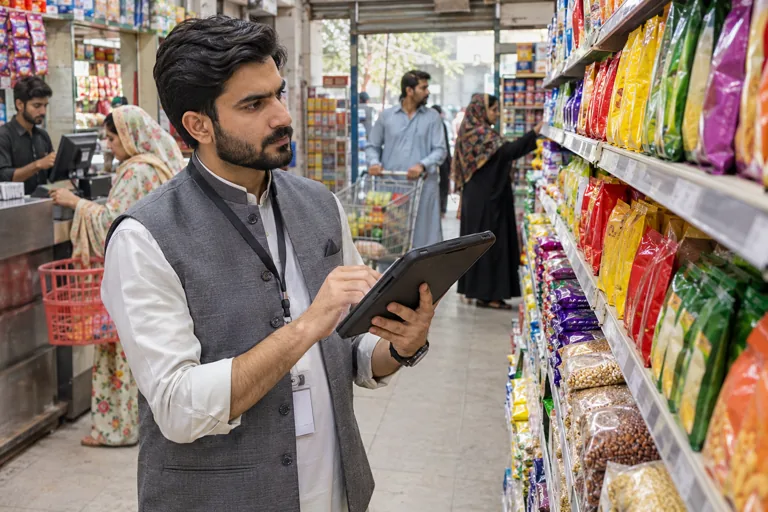
An evaluator visits a store with an approved product need and budget. They record how staff identify the need, explain suitable options and communicate the offer before checkout.
- Needs questions asked
- Relevant recommendation
- Checkout explanation clarity
Check shelf execution and product availability
An authorized auditor checks agreed stock, shelf placement and promotional displays. They record exceptions by store and product so category and operations teams can identify the responsible area.
- Agreed products available
- Display placement matches plan
- Promotional material present
Compare displayed offers with approved terms
An auditor checks selected shelf labels and promotion terms against the approved reference. Where a test purchase is in scope, the auditor compares the receipt with the displayed offer.
- Shelf price accuracy
- Offer terms visible
- Receipt and display agreement

Compare the same retail need across outlets
An evaluator uses the same shopping need at selected outlets and records comparable advice, product information and checkout steps. Differences in stock or store format stay visible in the report.
- Comparable product advice
- Clarity of purchase conditions
- Relevant differences by outlet format
Identify what customers say about finding and buying
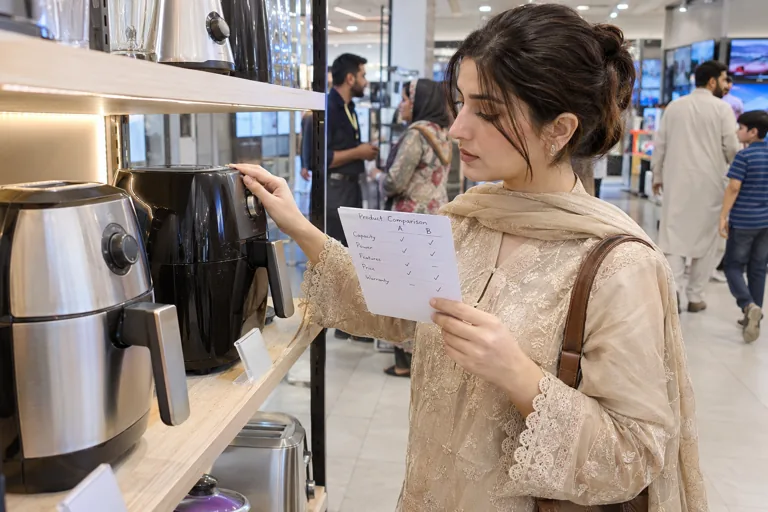
A survey asks shoppers about locating products, getting help and completing payment. It separates satisfaction with staff assistance from issues involving stock or waiting.
- Ease of finding products
- Helpfulness of assistance
- Checkout satisfaction

From finding a product to checking out
Agree the observable standards before fieldwork. Record exceptions by stage so each team can see where the customer needs help.
- Enter and browse
- Ask for help
- Compare options
- Check the offer
- Resolve a question
- Pay and leave
Operating standards and common service failures
| Journey stage | Operating standard to confirm | Service failure to check for |
|---|---|---|
| Enter and browse | The customer can find the category and identify the applicable shelf price. | Labels are missing or cannot be matched to the product. |
| Ask for help | Staff establish the intended use and explain suitable options within the stated budget. | Staff recommend an option before asking what the customer needs. |
| Compare options | The associate explains relevant product differences and confirms available choices. | The customer cannot understand which option meets the stated need. |
| Check the offer | Staff explain the eligibility and timing of the displayed promotion. | The shelf display and staff explanation describe different conditions. |
| Resolve a question | The team clarifies a price or purchase condition before checkout. | The customer is referred to another counter without an answer. |
| Pay and leave | The receipt reflects the approved price and any applicable offer. | The discount disappears at checkout without a clear explanation. |
Sector program options
- In-store sales and service evaluations
- Merchandising and availability audits
- Price and promotion execution checks
- New-store readiness assessments
- Competitor retail comparisons
- Returns and customer-support studies
How to run the program
- Define the product, budget, offer reference and whether a purchase is in scope.
- Pair a shopper visit with a separate authorized shelf check when the question spans service and merchandising.
- Assign display, checkout and staff communication issues to their respective owners before the next visit cycle.
What retail mystery shopping covers
Retail mystery shopping evaluates an ordinary shopping interaction, while an authorized retail audit checks agreed store conditions openly. Combining these methods can separate staff assistance from stock, signage and checkout execution.
Can customers find a suitable product, understand the offer and complete checkout with clear information?

How an evaluation works
A shopper asks for a product within a set budget. The assistant suggests an option, but the shelf offer and checkout explanation differ. A separate authorized check records the displayed promotion so the team can distinguish a sales explanation gap from a price-execution issue.
- Set the product category, budget and realistic customer need.
- Observe assistance, recommendations and explanations without creating artificial objections.
- Complete or stop the purchase at the approved point and record offer and checkout details.
- Keep customer observations and authorized merchandising findings in separate report fields.
Evaluation areas and KPIs
- Customer acknowledgment
- Product availability
- Needs discovery
- Relevant product recommendation
- Product explanation clarity
- Shelf price accuracy
- Promotion execution
- Checkout accuracy
- Receipt provision
- Return guidance
- Store presentation
What your team receives
- Store customer-journey findings
- Merchandising and availability exceptions
- Price and promotion execution findings
- Checkout and service-recovery observations
- Store comparison and action priorities
Reporting and turnaround
We provide individual evaluation findings, location comparisons and consolidated management reporting for the agreed retail journey. We connect observations to the permitted evidence and identify priority gaps for the responsible team.
We set fieldwork cycles, review milestones and release dates in your proposal. Clarifications are resolved before findings are released, and the proposal defines how time-sensitive exceptions are communicated.
Turn observations into reviewable actions
- Correct mismatched signage and staff guidance through separate owners.
- Review missed discovery questions before changing sales scripts.
- Repeat comparable visits after merchandising and coaching changes.
Assign each action to an owner and due date. Repeat an equivalent scenario after the change, preserving important differences in channel, timing and location. Improvement in a later sample is an observation to interpret, not proof of causation.
Select the service around the journey
Compare retail findings through reporting and location comparisons and review evidence and scoring checks before agreeing the output.
Boundaries and procurement inputs
A visit does not establish inventory accuracy for every item or replace a full stock count.
- Exact outlet, branch or channel list in Pakistan and any language requirements.
- Approved customer profile, scenario, reference documents and evaluation frequency.
- Permitted evidence, purchases or reimbursements, access requirements and exclusions.
- Required report fields, review responsibilities, delivery milestones and action owners.
Share the location list for Pakistan fieldwork feasibility planning or prepare an industry evaluation brief. International teams can also review Pakistan delivery requirements.
Questions about retail evaluations
Can you check both customer service and shelf or promotion execution?
Yes. We can combine a shopper visit with a separate merchandising checklist for availability, shelf presentation, promotional materials, and price consistency. Each part has its own evidence and reporting.
Can stores of different sizes be compared?
Yes. We compare the shared customer journey across formats and report format-specific requirements separately, so missing facilities or services do not distort the comparison.
Which retail locations and channels can we include?
We agree the location list, customer profile, and journey first. Depending on the brief, we can combine physical visits with telephone or digital checks and report each channel separately.
When will our team receive the findings?
The proposal sets dates for pilot approval, fieldwork, evidence review, and report delivery. We confirm how urgent issues are escalated and when the consolidated findings are available.
Get a free CX health check
Book a 20-minute conversation about one customer journey in Pakistan. Tell us where customers interact with your team and what you want to measure.
- Identify which visits, calls or digital interactions to evaluate.
- Discuss practical criteria and review a sector scorecard format.
- Clarify the locations, channels and evidence to include in a study.
- No cost or obligation for the introductory call.
You can also email info@mysteryshopping.pk to request a call.